

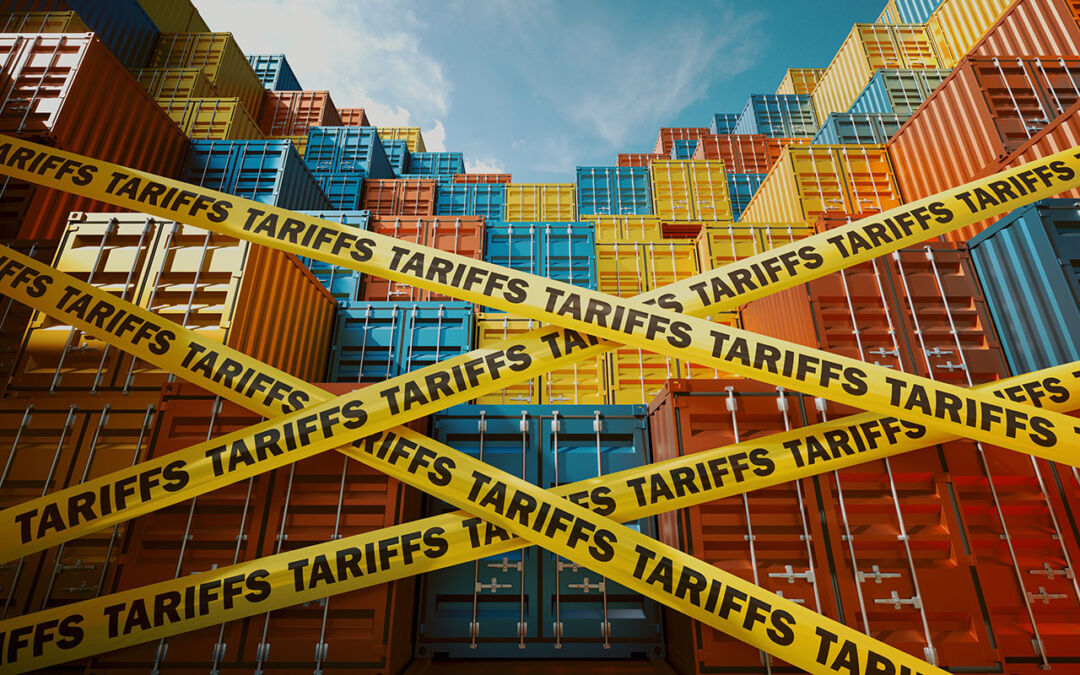
International trade has proven to be a strategy for building relationships between nations. When two countries exchange goods and services, they are accepting each other, creating harmony. International trade has been a supportive factor in a country's overall economic conditions. There are several ways to exchange goods between countries. Importing and exporting are separate industries that have several components to understand before getting into them. When an exporter from another country seeks to establish a connection with an importer, they must follow a set of procedures. Paying tariffs is one of the procedures that significantly impacts businesses, exports, and imports in international trade.
This blog will cover all aspects of imposing a tariff and its impact on making international trade more efficient for both countries.
Tariffs are taxes imposed by governments as an integral part of trade policy. It is imposed and collected by trade authorities, making imported goods less competitive and more expensive than locally produced goods. Tariffs are imposed to protect local industries while still allowing people to access international goods in their local markets, but at higher prices. Tariffs serve as a source of income for governments that heavily influence foreign policy.
There are certain types of tariffs, such as:
Ad valorem tariffs are taxes on imported goods based on the product's total value, with a fixed percentage rather than per unit. Ad volarem means 'according to the value,' making them directly proportional to price increases. Governments impose these tariffs to create a good balance of trade, supporting local industries and producers.
Specific tariffs are taxes imposed on imported goods per unit, calculated by quantity, weight, and volume. These kinds of tariffs are usually predictable, making it easier to plan future investments, unlike ad valorem tariffs. These tariffs can make lower value goods more expensive and make imports less competitive.
Compound tariffs are a combination of ad valorem and specific tariffs, created to benefit local industries. Compound tariffs ensure revenue even when international prices fluctuate. Compound tariffs are useful for both the quantity and the value of goods, especially for complex products.
Government officials imposed tariffs on imported goods to balance trade and protect domestic industries. People will not choose imported goods as their alternatives to the locally produced products due to higher prices. Here, the question arises, why import the products at all? It is due to the fact that tariffs are also considered a revenue for the government to help create a balance of trade between countries.
Tariffs are sometimes increased and decreased in response to political and economic conditions. Many countries have bonded on trade agreements with lower tariffs due to frequent trade. Where tariffs can be the primary reason for higher product prices, they can increase local employment and production rates, supporting local employment.
Applying tariffs on imported goods can have several positive effects on international trade. Some of these benefits are mentioned below:
When local producers look at the market to analyze their direct and indirect competitors, they can spot imported goods sitting on the shelf. From a business perspective, high tariffs on imported goods make them more pricey, encouraging local manufacturing to meet the same quality standards as international companies but at low rates. Local producers take it as a healthy competition, working to improve their production quality standards.
Tariffs act as a barrier to the import of goods. With high tariffs, the cost of imported goods rises, giving local and emerging industries a chance to develop new ideas and serve as viable alternatives to these products. New companies are investing in new technologies and infrastructure to make the most of their limited resources.
Tariffs are taxes imposed by governments on imported goods. This also increases the cost of raw materials for businesses and the cost of finished goods for consumers. They look for better alternatives and substitute locally produced products. This whole process decreases their dependence on foreign goods. So that, in situations like a global pandemic, local businesses have nothing to worry about when sourcing raw materials for continuous production.
Tariffs are customs taxes collected by authorities at the time a consignment is received. These taxes are allocated by the government and are credited directly as revenue. The higher the tariffs are, the more they will directly boost the government income and prosper the economy.
Higher tariffs can be used to negotiate trade agreements with other countries. It can act as a lever to pressurize the other government to lower its tariffs in return, demanding better trade terms and avoiding dumping.
Although there are a lot of positive effects of tariffs on international trade, there are some negative aspects as well, such as:
Due to high tariffs on imported goods, the prices become unaffordable for local people. It becomes impossible for consumers to meet the retail prices. High prices make the cost of living higher, especially due to additional taxes.
Higher tariffs reduce the availability of multiple products, potentially leading to shortages. When tariffs are high, the cost of goods rises. Only a few companies can import them, providing fewer choices and varieties for consumers and businesses. Increased prices create market shortages, making it difficult for suppliers to stock them on time.
We have been witnessing trade wars due to tariff rates since 2025. The war between the USA and other nations, especially China, has been a living proof of how tariffs trigger trade wars and disrupt the harmony between the two nations. When a country raises tariffs on another country, they rarely passively accept it and imposes more tariffs in return. This can escalate quickly and turn into a long-term, full-fledged trade war.
When businesses pay high prices for imported raw materials, the cost will directly reflect in the finished goods. Consumers face higher rates, which drive inflation in the economy. When the government imposes high tariffs, local producers take a long time to set up their industries and produce their own goods, which takes longer and costs more.
Do tariffs directly impact businesses and consumers? Let’s find out:
Tariffs raise the cost of importing raw materials, components, and finished products. Businesses relying on international suppliers often face increased operational expenses. These additional costs affect production budgets, logistics planning, and overall financial performance. Companies may need to allocate more resources to sourcing and supply chain management.
When tariffs increase import costs, businesses often reconsider their supplier choices. Companies start exploring suppliers from countries with lower tariffs or favorable trade agreements. This shift can create new business partnerships but may require time to evaluate product quality, reliability, and logistics compatibility before making long-term sourcing decisions.
Tariffs increase the cost of goods, directly affecting businesses' profit margins. If companies absorb these additional costs, their overall profitability decreases. On the other hand, passing these expenses to customers may reduce sales volume. Businesses must carefully balance pricing and operational efficiency to maintain stable profit margins.
Businesses often revise their pricing strategies when tariffs increase product costs. Companies may raise prices to maintain profitability or introduce budget-friendly alternatives to retain customers. Pricing adjustments require careful market research, as sudden price increases can erode brand competitiveness and customer loyalty in highly competitive industries.
Tariffs encourage businesses to explore local suppliers or new international markets with lower trade restrictions. Local sourcing helps reduce dependency on imported goods and improves supply chain stability. Companies also expand into alternative global markets to maintain cost efficiency and ensure consistent availability of raw materials and products.
Tariffs increase the cost of imported goods, which often leads to higher retail prices for consumers. Businesses pass additional expenses to customers to maintain profit margins. As product prices rise, consumer purchasing power decreases, making certain goods less affordable, especially for price-sensitive markets and essential household products.
When tariffs increase import costs, some businesses reduce the variety of imported products they offer. Higher expenses and complex trade regulations discourage companies from sourcing certain items. As a result, consumers experience limited product availability and fewer choices in quality, brand selection, and international product diversity.
When businesses switch suppliers to avoid tariffs, product quality may vary. New suppliers may use different materials, manufacturing standards, or production processes. Consumers might notice changes in product durability, performance, or overall quality. Businesses must maintain strict quality control to protect brand reputation and customer satisfaction.
Higher prices and limited product availability influence consumer buying behavior. Customers may shift toward locally manufactured or affordable alternatives instead of imported products. Consumers also become more price-conscious and selective in their purchasing decisions, encouraging businesses to adapt product offerings according to changing market demand and affordability trends.
If we talk about real-life examples of tariffs affecting global trade, we cannot ignore the latest US-China trade war in 2025. According to reports, the US imposed 145% tariffs on Chinese imports, while China retaliated with 125% tariffs, creating a significant conflict in the international market.
In the other report, EU import duties on selected goods, such as steel and aluminum, and on aerospace subsidies, especially from the US, are being imposed as a retaliatory measure.
As a business, you can better understand diversifying suppliers, market fluctuations, and tariffs with TradeYao. TradeYao is a trade data platform that helps you monitor the global business environment using historical data and forward-looking indicators.
If your business is highly affected by tariffs on imported goods, then TradeYao can help you in many ways. You can find real-time data on the international trade market and use it to adjust product prices and sourcing strategies. With TradeYao, you can monitor changing global trade policies, helping you make better purchase decisions.
In this blog, we have provided a summary of the tariff, including its advantages and disadvantages for the overall economy, importers, exporters, and consumers. Tariffs are duties that have a significant effect on a country's economy, whether they set prices for local goods or serve as a basis for economic and political relationships between countries. We can conclude that balancing market protection with revenue from import tariffs can be tricky, but it can be addressed through strategic planning for the global trade business. They can use trade data from platforms like TradeYao to predict and monitor market movements for better decision-making.

Industrial valves are small mechanical devices that play ...
Read More
The international trade of cotton is essential for the ra...
Read More
As one of the leading exporting nations in the world, Fra...
Read More