

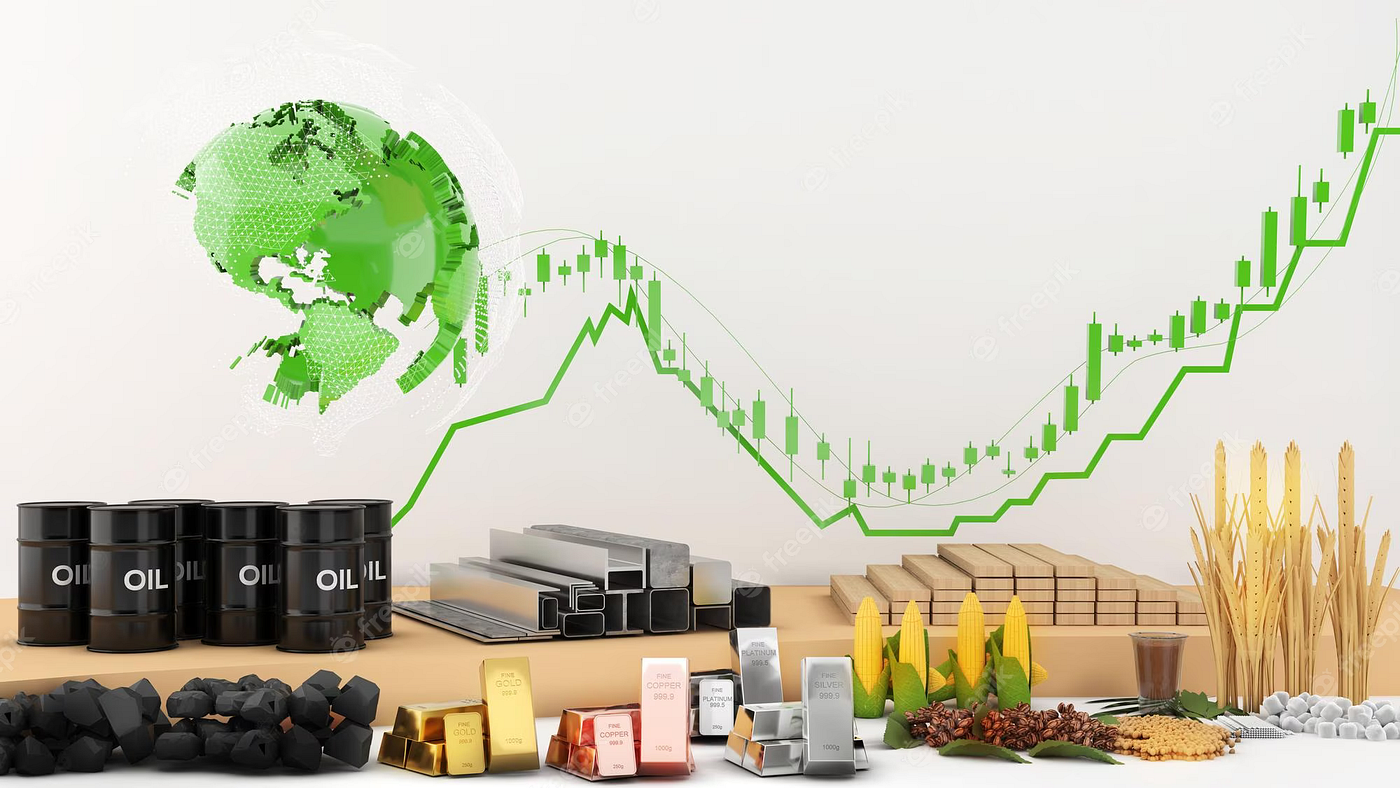
2026 has just begun, and enterprises are exploring various options for the most traded commodities that interest them for their next business venture. In this blog, we are going to explore various trading commodities that are measured by volume (Crude Oil) and value (Gold).
Some commodities can be bought and sold in the real world based on demand and supply, like wheat and copper, while others are bought and sold based on future prices and are usually contract-based, like gold and oil.
Highly traded commodities are listed on multiple global exchanges, such as:
CME Group (USA)
ICE (Global)
London Metal Exchange (LME)
Shanghai and Dalian exchanges (China)
The higher the demand for a commodity, the more popular and liquid it will be.
Commodities play a crucial role in every country’s economy. They are needed worldwide. Brings financial stability to the country. The demand for commodities never declines, as they are traded in bulk and daily.
The following are the main, most profitable traded commodities you can explore for your next bulk purchase.
When it comes to energy resources, crude oil and natural gas are among the most widely traded commodities, with demand growing daily across the globe.
Under metals, we have gold, copper, and aluminium, which are sold and bought for maximum profit. Nowadays, silver demand is skyrocketing as it is used in e-vehicles, solar panels, batteries, and various other products in high demand today.
Soft agricultural commodities such as wheat, cocoa, and coffee are known worldwide. People use products made from these commodities, which is why these are the most traded commodities on earth, and their demand will remain the same in the future as well. Industrial raw materials like iron ore and rubber are also frequently traded commodities across various industries.
If you are thinking of buying or selling various commodities, you need to explore these traded commodity groups, as they will help you stay updated on product prices, risks, and future value.
The CME Group is the world’s largest derivatives marketplace, based in Chicago. It trades major commodities, including crude oil, natural gas, gold, silver, corn, wheat, and soybeans. CME plays a key role in global price discovery and risk management for traders, producers, and investors worldwide.
ICE is a leading global exchange, especially known for energy and soft commodities. It is the main marketplace for Brent crude oil, natural gas, coffee, cocoa, and sugar. ICE is important for international trade because many global benchmark prices are set through its futures contracts.
The London Metal Exchange is the world’s primary market for industrial metals. It specializes in metals like copper, aluminium, zinc, nickel, and lead. LME prices are used globally as reference prices by manufacturers, miners, and traders, making it central to the global metals supply chain.
The Dalian Commodity Exchange is one of China’s major futures exchanges. It focuses mainly on agricultural and industrial commodities such as soybeans, iron ore, palm oil, and corn. DCE plays a crucial role in China’s commodity pricing and reflects demand from the world’s largest manufacturing economy.
The Shanghai Futures Exchange is a key Chinese exchange for metals and energy products. It trades commodities like copper, aluminium, zinc, crude oil, and rubber. SHFE is important because it reflects Asian market demand and is increasingly influencing global commodity prices.
TradeYao is the leading online B2B trade directory where global buyers and sellers can explore relevant businesses, connect with them, and, if satisfied with their products and services, seal the final deal. The platform is easy to use and equipped with the right tools to help you navigate various businesses to the one best suited to your business requirements.
Aside from information on companies, factories, and manufacturers, you can explore shipping details for numerous countries, what is being imported and exported in each country, and all delivery details, including the number of products, etc., from this comprehensive trade directory.
Here is the list of the most traded commodities in the world and where they stand in the market right now.
Crude oil is the most traded and valuable commodity worldwide, central to fueling transportation, industry, and global energy. It makes up a huge share of global commodity exports, about $1.4 trillion per year by value, making oil and petroleum products the largest traded commodities. Oil prices and demand influence inflation, production costs, and economic growth.
Natural gas is a major energy commodity traded both as pipeline gas and liquefied natural gas (LNG). Its trade value is very high, often exceeding $1 trillion in global energy markets, especially with growing demand for cleaner fuels. Seasonal demand (higher in winter) and infrastructure developments strongly influence prices.
Gold is a top precious metal and safe-haven investment, widely traded both physically and through futures/ETFs. Its market value of physical demand alone is estimated at around $350 billion to $400 billion annually, with daily trading liquidity even higher due to futures and financial instruments.
Coffee is the most traded soft agricultural commodity in the world. Global coffee production is roughly 170 to 180 million bags per year, representing more than $50 billion annually in trade value. Demand is driven by consumer markets worldwide, especially in the U.S. and Europe.
Soybeans are a key agricultural export used for food, oil, and animal feed. The global soybean market is about $220 billion to $230 billion in annual value, with large production in Brazil, the U.S., and Argentina. Soybeans move in large physical volumes globally.
Copper is a crucial industrial metal used in electrical wiring, construction, and renewable energy components. The global copper market is worth roughly $220 billion to $235 billion per year, making it one of the largest base metals by value traded.
Silver is both a precious and an industrial metal, used in electronics, solar panels, jewelry, and investment products. Its market value is about $25 billion to $30 billion annually, though trading volumes and investment flows often drive much larger turnover in futures markets.
Wheat is one of the world’s most important food grains. The global wheat market is valued at roughly $220 billion to $240 billion annually, with massive export flows from countries like Russia, the U.S., and the EU. Weather patterns and policy decisions heavily impact prices.
Palm oil is one of the most traded vegetable oils for food and biofuel. Its global trade value fluctuates heavily, but it is generally included as a key agricultural commodity within global oilseed markets worth hundreds of billions of dollars annually. Global oilseed markets (including soy and palm) are valued at over $250 billion to $270 billion.
Natural rubber is essential for tires and industrial products. While not as large as oil or grains, rubber is actively traded, particularly on Asian exchanges, and included in many commodity price indexes due to its importance in manufacturing. Its precise global annual value is less centralized but meaningful in industrial supply chains
Iron ore is the raw material for steel production and one of the largest traded bulk commodities by physical volume. China imported record amounts recently, with shipments exceeding 119 million tonnes in a single month, showing massive physical trade flows.
Rapeseed and canola are key oilseed crops traded worldwide for vegetable oil and animal feed. They are part of the global oilseed market valued at over $250 billion annually, with soybeans as the largest segment, but rapeseeds/canola contributing significant value and trade.
Finding traded commodities has become easy now. TradeYao is the renowned online B2B trade directory that helps you find relevant commodity suppliers and buyers and offers updated information on all business niches. Keep on reading this blog and explore the top traded commodities for your next sourcing or selling.
Industrial valves are small mechanical devices that play ...
Read More
The international trade of cotton is essential for the ra...
Read More
As one of the leading exporting nations in the world, Fra...
Read More