

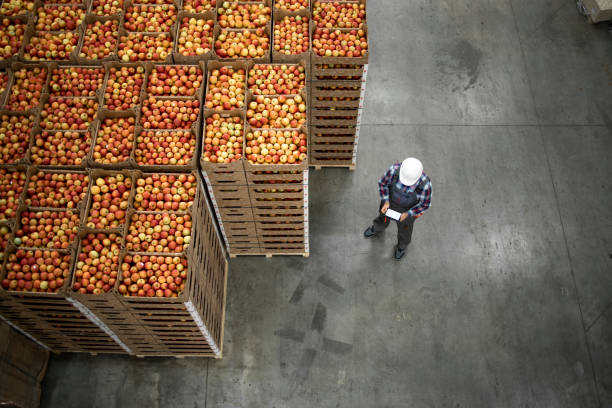
Agricultural exports play a key role in ensuring global food security and economic stability. These exports not only feed billions but also sustain millions of farming families worldwide. In 2025, Brazil leads globally with approximately USD 78.9 billion worth of agricultural exports, followed closely by the United States and China.
Such trade improves rural incomes, creates employment, and contributes to national GDPs. The growth of this sector is vital for both developed and developing countries. It helps bridge food supply gaps across continents.
This blog explores top exporting nations, emerging markets, leading commodities, and global trade dynamics shaping agricultural exports in 2025 and beyond.
According to The Business Research Company, the global agriculture market was valued at 12122 billion USD in 2024. By the end of 2025, it is expected to reach the value of 12974 billion USD with a CAGR of 7%. By the end of 2029, it is projected to reach the market value of 16763 billion USD with a CAGR of 6.6%.
The World Population Review ranks the top agricultural exporters for 2025 as Brazil, the United States, China, the Netherlands, Germany, France, Canada, Spain, Italy, and Australia. These nations have built their dominance through modern technology, vast arable lands, and efficient logistics systems.
For instance, Brazil is the largest exporter of agricultural products, including soybeans, beef, and sugar, while the U.S. leads the following agriculture exports, i.e, corn, soy, and meat exports. European countries such as the Netherlands and France specialize in dairy, wine, and processed foods, reflecting their advanced agri-industrial systems. The diversity of climate and innovation gives these countries a unique edge, keeping them ahead in global agri-trade.
Beyond the big exporters, several emerging nations are expanding rapidly in the agricultural sector. Peru has set an ambitious goal to reach USD 40 billion in exports by 2040, driven by high-value crops like avocados, blueberries, and grapes. Similarly, Uruguay and Paraguay are strengthening their positions as major exporters of beef and soybeans, leveraging their natural resources and commitment to sustainable farming.
Vietnam and Thailand are also rising stars, focusing on rice, seafood, and tropical fruits. These smaller nations prove that innovation, quality assurance, and trade diversification can transform local agriculture into global opportunities.
According to the Farm Bureau, U.S. agricultural exports reached USD 176 billion in 2024, with 75% of goods shipped to just ten markets, including China, Mexico, Canada, Japan, and the European Union. The USDA Economic Research Service identifies China as the largest importer of soybeans and grains, while Mexico and Canada are key buyers of meat and corn under the USMCA agreement. European nations import high-value products like nuts and specialty crops. Meanwhile, emerging markets in Southeast Asia, Africa, and the Middle East are increasing imports due to population growth and limited domestic production, making them vital destinations for exporters worldwide.
The USDA Outlook report with the title, World Agricultural Supply and Demand Estimates, says that corn, soybeans, and wheat remain the top traded agricultural commodities. The United States and Ukraine dominate corn exports, while India leads global rice exports. Reuters notes that U.S. wheat exports have seen slower sales due to strong competition from Russia and Australia. In the oilseed sector, Indonesia and Malaysia control most of the world’s palm oil exports, which are essential for global food processing. Specialty crops like garlic from China, spices from India, and fruits from Thailand and Mexico also account for rising trade values. According to S&P Global, livestock and dairy exports are experiencing steady growth, driven by global protein demand.
Global agricultural exports are influenced by evolving trade policies, environmental challenges, and technology adoption. Tariffs, subsidies, and regional agreements can either boost or restrict market access. Climate change, water scarcity, and soil degradation pose growing threats to sustainable production. However, technology is improving efficiency through precision farming, AI-based crop management, and biotech seeds. The OECD-FAO Agricultural Outlook 2025–2034 predicts a 14% growth in global agriculture and fish production by 2034, driven by better yields and innovation. Meanwhile, the World Trade Organization highlights that export bans and global conflicts continue to disrupt supply chains, influencing food prices and trade flows.
Trade agreements play a big role in shaping global agricultural exports. They reduce tariffs, set fair rules, and make it easier for countries to sell farm goods abroad. For example, the USMCA helps U.S., Canadian, and Mexican farmers trade smoothly across borders. The EU-Mercosur deal aims to boost exports between Europe and South America, especially in meat, grains, and dairy. In Asia, the RCEP agreement connects key markets like China, Japan, and Australia, creating one of the largest free trade zones. These agreements encourage fair competition, lower export costs, and open new markets for farmers worldwide.
Here is the list of agriculture exports by countries. Take a look and learn more about these countries’ exports.
The United States continues to be a global powerhouse in agricultural exports. According to the USDA Economic Research Service, it leads in corn, soybeans, and beef shipments worldwide. The country’s success comes from advanced farming technology, large-scale production, and efficient transportation systems. U.S. farmers benefit from fertile land and government support that strengthens global competitiveness.
However, rising competition from Brazil and Argentina, especially in soy and corn exports, is a growing challenge. Despite this, the U.S. remains a trusted supplier to key markets like China, Mexico, Japan, and the European Union, maintaining a strong position in global food trade.
Brazil stands as one of the world’s top agricultural exporters, leading in soybeans, beef, poultry, and sugar. Its success is powered by rich natural resources, vast farmland, and a favorable tropical climate that supports year-round cultivation. Brazil’s main export destinations include China, the European Union, and the Middle East, where demand for its soy and meat continues to rise.
The country’s strong logistics and investment in agribusiness innovation also help maintain its dominance. However, issues like deforestation and sustainability concerns are gaining attention. Still, Brazil remains a cornerstone of the global food supply chain.
Both India and China play vital roles in the agricultural export market. India is a global leader in rice, spices, tea, and fresh fruits, supported by its diverse climate and large farming workforce. The government promotes exports through initiatives like the Agriculture Export Policy and digital marketplaces. China, on the other hand, focuses on processed, packaged, and value-added food products, moving beyond traditional farming.
It exports large volumes of garlic, vegetables, and seafood. Both countries aim to strengthen their positions by improving technology, ensuring quality standards, and exploring new global markets.
Despite ongoing challenges due to conflict, Ukraine remains one of the world’s most important grain and oilseed exporters. It plays a key role in supplying wheat, corn, and sunflower oil to countries in Europe, Asia, and Africa. Known as the “breadbasket of Europe,” Ukraine’s fertile black soil supports high crop yields that are vital for global food security.
Although the war has disrupted supply chains and port operations, international partnerships and aid have helped sustain its export levels. Ukraine continues to be a reliable source of essential agricultural goods for many import-dependent nations.
Global agricultural exporters face multiple barriers that limit trade potential. Poor infrastructure and high shipping costs hinder efficiency in many developing regions. Sanitary and phytosanitary standards make it difficult for small exporters to enter premium markets. Moreover, climate-related risks, labor shortages, and currency fluctuations add further complexity to the situation. Political instability, trade wars, and export bans, such as those seen during major global crises, disrupt supply chains and impact food availability. Addressing these constraints through modern logistics, policy reform, and diversified trade partnerships is key to maintaining steady agricultural export growth.
New opportunities in agricultural exports are emerging in organic farming, processed food products, and sustainable agriculture. Exporters can tap into rising demand in Africa, Asia, and the Middle East, where populations and consumption levels are increasing rapidly. Businesses can use digital B2B platforms and online marketplaces to connect directly with global buyers, improving transparency and efficiency. Certifications such as Fair Trade, Organic, and Rainforest Alliance add product credibility and market value. Exporters focusing on eco-friendly practices, efficient supply chains, and brand storytelling can stand out in competitive markets while meeting future sustainability goals.
TradeYao is an online B2B trade directory that provides you with updated results on various countries, buyers, suppliers, and companies. You can explore the latest statistics and numbers in the agriculture industry, including top countries, high-demand products, and live shipping details.
The OECD projects steady growth in agricultural trade through 2030, supported by rising global populations and higher food consumption. Agricultural and fish production are expected to expand by 14% by 2034, led by developing economies. However, trade liberalization and sustainability regulations will redefine competitiveness. As consumers shift toward plant-based and health-focused diets, crop patterns and export preferences will evolve. Countries investing in technology, sustainability, and supply chain modernization are likely to gain a long-term edge. The next decade will test how nations balance productivity, environmental protection, and fair trade growth.
Global agricultural exports continue to drive food security, economic development, and trade balance worldwide. Brazil, the U.S., and China remain the dominant exporters, while Peru, India, and Vietnam are rising rapidly with niche and sustainable products. However, issues like climate risks, policy barriers, and logistics challenges persist. The path forward lies in innovation, sustainability, and digital transformation of agricultural trade. Exporters who adapt quickly to these changing trends will capture emerging market opportunities, strengthen partnerships, and secure long-term success in the global agricultural economy.
Soybeans are one of the most traded agricultural products in the world. They go into animal feed, cooking o
READ FULLCopper is often called “Dr. Copper” because it acts like an economic indicator. When the global
READ FULLSolar panels have become one of the most important parts of clean energy today. Many countries are now producing an
READ FULL