

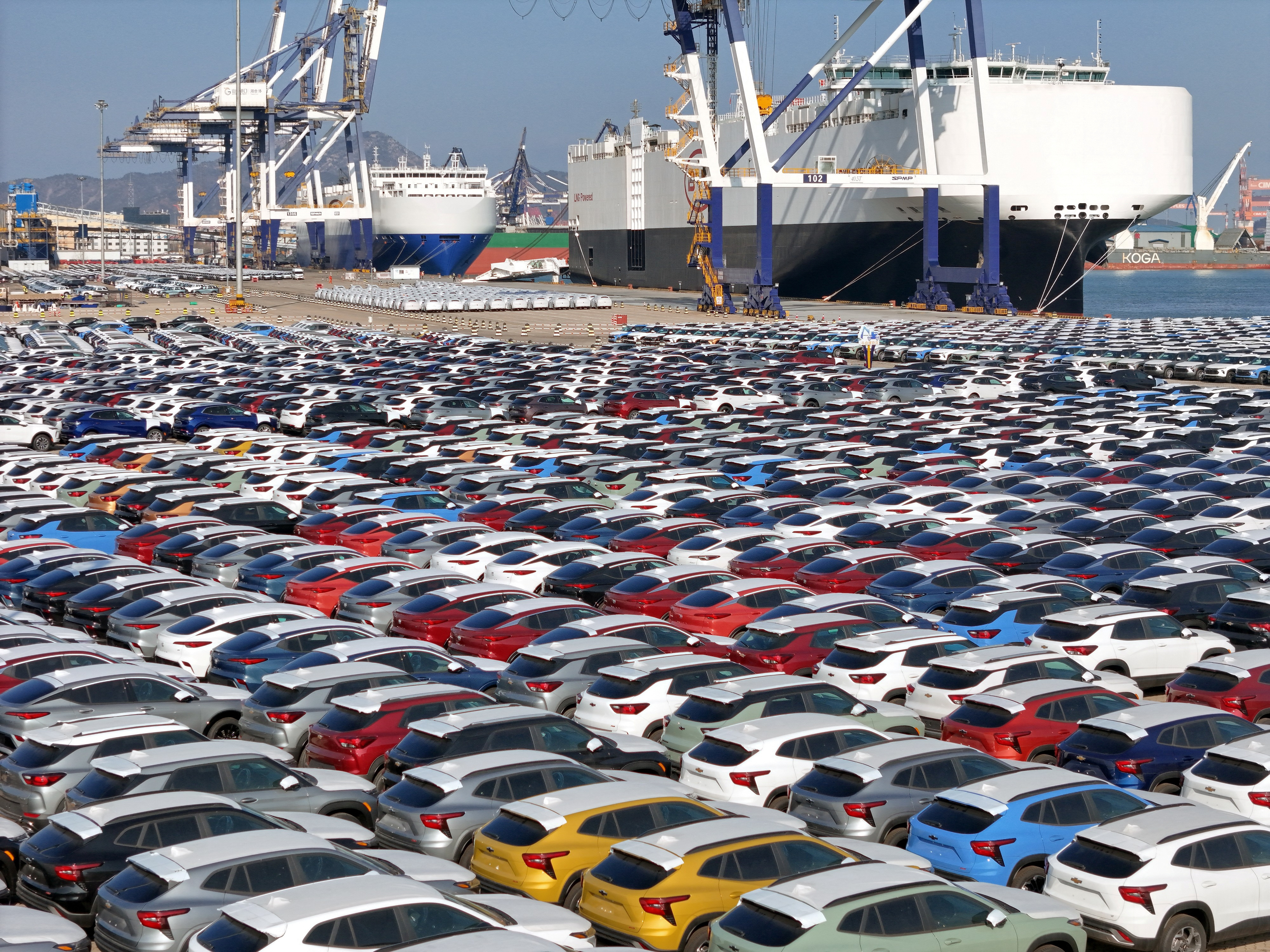
China is known for its powerful economy and industrialization, and is one of the leading exporters of various products to countries worldwide. According to CarNewsChina in 2023, the Chinese automotive industry exported vehicles worth around 5.22 million units from January to December. The export rate of vehicles was around 52% in 2023.
China has quickly risen to become the world’s largest car exporter. In 2024, the country exported approximately 6.41 million vehicles, representing a 23% increase over the previous year. Out of this, more than 1.28 million were new energy vehicles (NEVs), showing China’s strength in the electric car market. Analysts expect exports to continue growing in 2025 as demand for affordable cars and EVs increases worldwide.
Global markets are now increasingly relying on Chinese automobiles due to their lower prices, advanced technology, and reliable supply chains. Chinese brands, such as BYD, SAIC, and Geely, are gaining popularity in Europe, Asia, Latin America, and the Middle East. With rising fuel costs and new green policies, many countries are turning to China for both traditional and electric cars. This trend shows that China is shaping the future of the global auto industry.
According to AutoMobility, China is expected to surpass the revenue generated in 2024 through the export of automobiles. Around 20% of the vehicles are now being sold under the label of made in China.
China has become the world’s top car exporter. In 2024, it exported 6.41 million vehicles, a rise of about 23% over 2023. China’s exports generated roughly US$117.4 billion in value. Nearly 40% of its passenger vehicle exports are new energy vehicles, and that vehicle market is growing.
China’s rise is fast. In 2019, it exported fewer than 1 million cars; by 2024, it had overtaken established automakers like Japan, Germany, and Mexico. This shift is driven by low production costs, large capacity, government support, and strong NEV technology. China also built up a full supply chain, from batteries to chips. These strengths let Chinese brands offer EVs and hybrids at competitive prices, pushing them into many global markets.
Here are some of the biggest countries buying cars from China, and how the trends look:
|
Country |
Units Imported (H1 2025) |
Trend / Note |
|
Mexico |
280,000 |
Top export destination for Chinese cars in H1 2025 |
|
UAE |
228,979 |
Rapidly growing destination |
|
Russia |
180,067 |
Decline compared to previous years |
|
Brazil |
Not specified |
Steady increase, strong demand for NEVs |
|
Belgium |
Not specified |
Major European hub, imports many NEVs |
|
Saudi Arabia |
Not specified |
Fast-growing Middle East market, strong demand for EVs & hybrids |
Europe is a key market for Chinese car exports, especially New Energy Vehicles (NEVs). Belgium is among the top countries importing Chinese EVs. The UK also ranks high for NEV imports from China. Spain and Germany are growing markets, though not as large yet as Belgium or the UK.
Chinese companies are expanding service, sales, and R&D presence in Europe. Tariffs are a challenge: Europe imposed tariffs on some Chinese EV imports, which is pushing manufacturers to adjust pricing, hybrid models, or build partnerships overseas.
Russia became one of China’s largest car importers. In August 2024, more than 700,000 vehicles were exported from China to Russia, making it the biggest destination at that time. However, growth is unstable. In 2025 first half of 2025, exports dropped to about 180,067 units, indicating a sharp decline.
CIS countries (former Soviet states) benefit from proximity and lower transportation costs. Political & trade shifts (sanctions, supply chain realignments) also affect demand. China’s exports to Russia often include more affordable ICE (internal combustion engine) cars, plus hybrids/nearly EVs where feasible. The decreasing trend suggests Russia’s demand may be softening or shifting due to economic issues or trade barriers.
China is making strong inroads in Latin America. Mexico, for example, imported over 280,000 vehicles in the first half of 2025, making it the top market for Chinese exports in that period. Brazil also imports many EVs from China, and Brazil is often one of the top destinations for NEVs.
Chile has a lower volume than Mexico or Brazil, but it's important, particularly for EVs and hybrids, due to environmental policies and import demand. China’s electric car export is rapidly increasing in Latin America because of people's interest in sustainable energy usage.
Chinese automakers are capitalizing on lower tariffs or growing incentives in Latin American countries. Affordability, simpler service models, and wider dealer networks help Chinese cars do well in Latin America.
The Middle East is becoming a core export zone. UAE, Saudi Arabia, and Egypt are among the fastest-growing importers of Chinese cars, especially EVs and hybrids. For example, the UAE imported 228,979 units in the first half of 2025. In many of these countries, demand is rising because governments are pushing green vehicle policies, fuel is expensive, and people want new tech.
In Africa, South Africa and a few others are growing, but more slowly. Issues like infrastructure, charging networks, and import costs matter. Yet Chinese NEV makers are preparing: offering local after-sales support, working on local assembly, or partnerships to reduce cost.
In the Asia-Pacific, Thailand, Australia, and the Philippines are key markets for Chinese cars. China exported significant numbers of NEVs to Thailand and the Philippines in 2024. Australia is also among the top 10 countries importing Chinese vehicles.
Thai and Philippine demand is boosted by government incentives for EVs, and consumers want more affordable hybrid or plug-in options. Australia’s market is more mature, so Chinese automakers often compete with established brands, but competitive pricing and EV features help. China also exports used cars to other Asian countries at profitable prices.
Several trends are powering China’s car export growth:
NEV's dominance: Electric and hybrid cars are rising fast. In the first half of 2025, NEV exports grew 75.2% year-over-year.
Export diversification: Chinese automakers are reaching new countries in Latin America, the Middle East, and Southeast Asia. They are less reliant on one market.
Technological improvements: Better battery tech, smart features, connected cars, and safety improvements. These make Chinese cars more attractive.
Brand growth: Brands like BYD, Chery, SAIC, and Geely are improving quality and reputation. They invest in foreign service networks.
Price competition & supply-chain strength: China has a strong local supply chain for batteries, electronics, and production scale. They can lower costs. Also, government policies and subsidies help.
While China is growing fast, there are real challenges:
Tariffs & trade barriers: Some markets (Europe, especially) have placed high tariffs on Chinese EVs. That raises costs for consumers.
Quality perception: In some places, consumers still worry about long-term reliability, safety, and service. Chinese brands need stronger after-sales support.
Regulation & policies abroad: Emissions, safety standards, and certification can differ, causing delays or added costs.
Competition: From established brands (Toyota, Volkswagen, etc.) and from other rising EV makers.
Supply chain & input costs: Raw materials (batteries, chips) fluctuate in price. Disruptions in export, shipping, or logistics can hurt timelines.
TradeYao is the reliable trade directory that provides you with precise information, be it related to import and export buyers or sellers, companies, distributors, etc. The best thing is that you can achieve every detail you are looking for related to product shipments from various countries and industries. Be it the time, date, pieces loaded for shipment to the estimated time of delivery, and many more, are available on the platform, so make your sourcing and selling experience worth it and get useful information from Trade Yao.
China has moved from being a modest car exporter to the world’s number one. It shipped over 6.4 million vehicles in 2024, with a strong push into electric and hybrid cars. It sells to many parts of the world: Europe, the Middle East, Latin America, and Asia-Pacific.
Its strengths are scale, cost competitiveness, improving tech, and growing global presence. But hurdles like trade barriers, quality perception, and regulation remain.
For consumers and markets, the rise of Chinese car exports means more choice, lower prices, and fast growth in EV availability. For automakers and nations, it means adapting: improving standards, building supply chains, responding to change.
Soybeans are one of the most traded agricultural products in the world. They go into animal feed, cooking o
READ FULLCopper is often called “Dr. Copper” because it acts like an economic indicator. When the global
READ FULLSolar panels have become one of the most important parts of clean energy today. Many countries are now producing an
READ FULL