

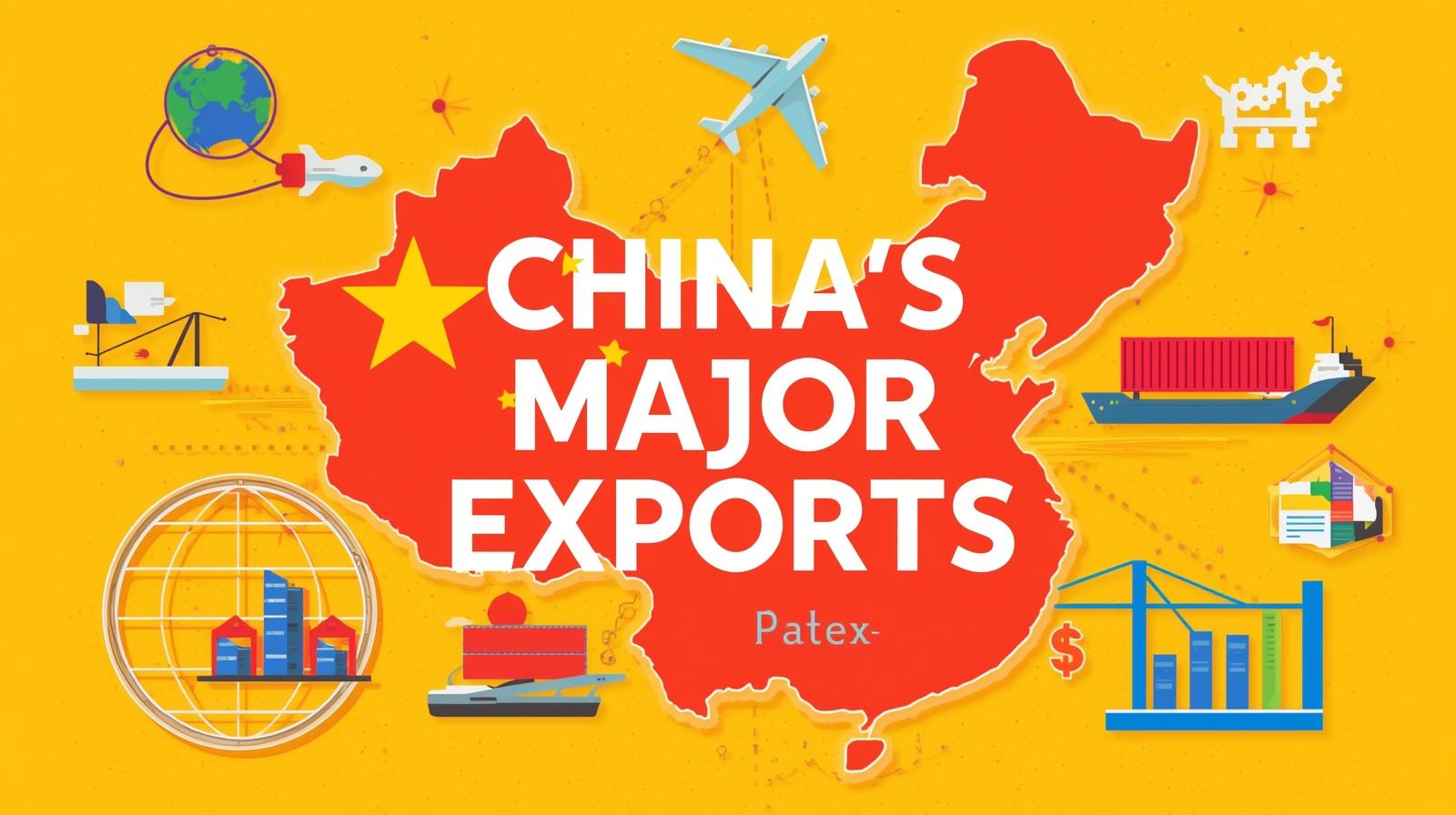
In global manufacturing and exports, China is often called the “world’s factory” because of its huge role in goods production. The backbone of China’s economy is its exports, which play a crucial role in industrial growth, fueling foreign exchange earnings, and providing millions of jobs. In global trade, China continues to show resilience in 2025. In the first half of 2025, China’s exports grew by 7.2% despite global supply chain challenges.
Understanding China's export market is essential for businesses, investors, and policymakers. It not only shows global consumption trends but also helps in supply chain planning and identifying new trade opportunities. China’s export market portfolio is vast and diverse; whether it is machinery, electronics, textiles, or automobiles, the opportunities are huge.
In this blog, we will discuss in detail the top 10 export products that lead China’s trade revenues, key trade partners across the world, and future trends that will shape China’s global trade position in the upcoming years.
Over the past few years, China has changed its position from a low-cost manufacturing hub into one of the world’s leading exporters. The country first built its economy by exporting low-cost goods like textiles and toys. Now, it sends out more advanced products, including semiconductors, industrial machinery, and electric vehicles.
China’s role in the world economy is that of the largest exporter, a major manufacturing hub, and a key driver of global trade and investment. The top export industries of China are industrial machinery, electronics, vehicles, steel, and medical instruments. In 2024, China exported electronics valued at $927 billion, along with $568 billion in machinery and $216 billion in vehicles.
China stands out for its scale and diversity when compared with other major exporters like the US, Germany, and Japan. Germany is strongly focused on industrial machinery and automobiles, Japan focuses on advanced components and robotics, and the US exports high-value technology and services. From consumer electronics to industrial equipment, China leads across multiple categories.
Moreover, government policies have also played a crucial role. Programs like the 'Made in China 2025' strategy promote high-tech innovation, and free trade agreements such as the RCEP help China connect more closely with nearby economies. Together, these efforts and strong industry support help China lead in global exports.
|
Category |
Value / Trend |
|
Total Trade (Jan 2025) |
RMB 4,054.3 billion (Exports: RMB 2,010.9b; Imports: RMB 1,376.7b; Surplus: RMB 634.2b) |
|
Total Trade (May 2025) |
RMB 4,164.3 billion (+3% YOY) |
|
Total Trade (April 2025) |
Exports: RMB ∼2,100b; Imports: RMB ∼1,650b; Surplus: RMB 446.4b |
|
Exports (June 2025) |
USD 325.2 billion (+5.8% YOY) |
|
Exports (April 2025) |
USD 314.1 billion (+8.1% YOY) |
|
Exports (H1 2025) |
RMB ∼13,000 billion (+7.2% YOY) |
|
Imports (H1 2025) |
RMB 8,787.5 billion (−2.7% YOY) |
|
Imports (Jan–May 2025) |
RMB 7,276.7 billion (−3.8% YOY) |
|
Imports (May 2025) |
RMB 1,533.1 billion (−2.1% YOY) |
|
Goods Trade Surplus (April 25) |
RMB 446.4 billion surplus |
|
Major Partner (Jan–May 2025) |
ASEAN largest partner (+9.1% YOY trade growth) |
|
Export Growth Sector |
Mechanical & electrical products (+9.5%, ∼60% of exports) |
|
Import Trends |
Commodity-driven imports weak (oil, ore, soybeans) |
|
Trade Balance Trend |
Consistently large goods surplus |
Reference: https://www.safe.gov.cn/
The following are China’s top export products:
Electronics are China's largest export sector, with almost $927 billion of contribution in 2024. The top electronics categories are smartphones, semiconductors, integrated circuits, and consumer electronics. The top buyers are the U.S., EU countries, and other ASEAN economies. For example, the United States is one of the largest importers of Chinese electronics.
There is growing demand for 5G and 6G devices, IoT solutions, and AI-powered gadgets, which shows a positive outlook. Still, China faces obstacles because Western countries have placed export restrictions on advanced semiconductor technologies.
With a worth of $568 billion in 2024, machinery is China’s second-largest export. The machinery category includes engines, turbines, industrial pumps, and computers. Many developing countries rely heavily on Chinese machinery for industrial growth, while developed economies import high-tech equipment such as semiconductor tools and automation systems.
Automation, robotics, and smart manufacturing are the key drivers of future demand. China is increasing its investments in industry 4.0, which should help the sector stay competitive.
In 2024, China exported almost $126.3 billion worth of lightning products and furniture. The most popular products are LED lighting, wooden furniture, office chairs, and home decor products. The United States, Europe, and Asia are the largest markets. Other global retail chains like IKEA and Wayfair rely heavily on Chinese suppliers.
The market is expected to grow as more buyers look for sustainable and stylish home products. Using eco-friendly materials, smart lighting, and new design ideas will be key to meeting this demand.
China exported $141.16 billion worth of plastics and related products in 2024. The top products included are consumer plastics, packaging materials, and industrial components. The major buyers of this category are construction companies, packaging industries, and household goods manufacturers.
But international concerns over plastic waste and pollution present challenges. The demand for bioplastics and recyclable alternatives is expected to shape the future of this export category.
In the vehicle exports market, China is becoming a global leader, especially in electric vehicles (EVs). The export value of vehicles reached $216 billion in 2024. In Europe, Latin America, and Southeast Asia, Chinese brands such as BYD and Geely are expanding rapidly. Exports also include batteries, charging equipment, and car parts.
The global focus towards sustainability and green mobility ensures that China’s EV exports will keep growing while compliance with global safety standards remains a challenge.
Cameras, diagnostic equipment, and precision tools are the top products in this category. The demand for Chinese medical devices increased during the COVID-19 pandemic, and the exports have remained strong since then.
China exports these items across Asia, Africa, and Latin America. The future depends on biosensors, portable medical devices, and telehealth equipment; however, compliance with global medical standards is important.
In the world, China is the biggest steel producer and exporter. China exported 9.84 million metric tons of steel in July 2025. These types of exports are important for infrastructure, construction, and manufacturing industries around the world. The future opportunities depend on semi-finished steel products and high-strength alloys.
In textile and garment exports, China is the main leader in this sector. The other competitors, such as Vietnam and Bangladesh, have gained strong market share because of lower labor costs, but still China holds a strong position in design, quality, and large-scale production. The future of this industry relies on smart textiles, eco-friendly production methods, and sustainable fabrics.
In the global toy industry, China holds a special position. Exporting billions worth of products every year. There is a strong demand from the US and Europe, especially during Christmas and holidays. The exports also depend on seasonal demand. Educational toys, smart gadgets, and esports equipment are set to play a big role in shaping the future of this sector.
China is also known for exporting sneakers, leather shoes, and fashion footwear. The country remains a key supplier for international brands. Competition from other countries like India and Vietnam is increasing, but China’s scale, supply chain integration, and innovation are giving it a new start. The future will be focused on eco-friendly, lightweight, and stylish designs.
Below is the list of China's export partners in the world:
The US is China’s largest export market, with an overall import worth of $438.7 billion in 2024. In early 2025, exports to the US fell by 10.7% because of tariffs and ongoing trade tensions. The main products shipped were electronics, furniture, and machinery.
Reaching $46.8 billion, China’s exports to the EU rise by 10.4% in 2025. The top products are vehicles, machinery, and textiles. The Netherlands serves as a major re-export hub, while Germany imports high-tech machinery.
In 2025, China's exports to ASEAN countries such as Malaysia, Vietnam, and Thailand reached 13%. With many components being assembled in ASEAN before being shipped globally, these countries are both export destinations and part of China’s supply chain integration.
In 2024, Japan imported almost $152 billion worth of Chinese goods. South Korea imports a lot of electronics, machinery, and plastics. This trade is supported by close industrial cooperation, but sometimes political tensions can have an impact.
With $103 billion, exports to Africa reached 21.45% in 2025. Countries such as Nigeria, South Africa, Egypt, and China supply consumer goods, electronics, and construction machinery.
The UAE and Saudi Arabia buy electronics, machinery, and consumer goods from China. As people in the region have more money to spend, it is becoming a promising market for the future.
Last but not least, China exports a huge range of machinery, electronics, and manufactured goods to Mexico, Brazil, and Chile. Logistics is one of the main challenges, but the demand continues to grow steadily.
The future of China’s export is shifting towards high-technology products like AI, EVs, robotics, and biotech equipment. Sustainability is the main key factor that is playing a key role in China's export market. China is investing heavily in renewable energy, green manufacturing, and recyclable materials to meet the international climate goals.
Trade tensions with the US and Europe, as well as efforts to diversify global supply chains, could put pressure on China’s leading position. While exports to the US dropped by 10.7% in early 2025, exports to ASEAN and Africa grew strongly. In the future, China is likely to remain a key player in global trade, but it will need to manage innovation, sustainability, and geopolitical challenges.
For businesses, importers, and investors, exploring platforms like TradeYao can be an effective way to know the current data and analysis of China's exports to stay ahead of global trade opportunities. The platform helps in discovering the authentic China B2B lead data by country.
The platform delivers clear, precise, and reliable reports to support you in exploring new markets, sourcing products, or tracking trade flows. To know more in detail about the Chinese export market, trade partners, and major exporting products, TradeYao can provide relevant and authentic trade market insights.
From electronics and machinery to furniture, textiles, and steel, China's top 10 exports are playing a crucial role in shaping international trade. The major trading partners, the EU, the US, ASEAN, and Africa, rely heavily on Chinese goods.
With the global demands shifting towards sustainable and high-tech products, China faces both challenges and opportunities. Overall, China will remain one of the most influential forces in the international trade system in the years ahead.
Industrial valves are small mechanical devices that play ...
Read More
The international trade of cotton is essential for the ra...
Read More
As one of the leading exporting nations in the world, Fra...
Read More