

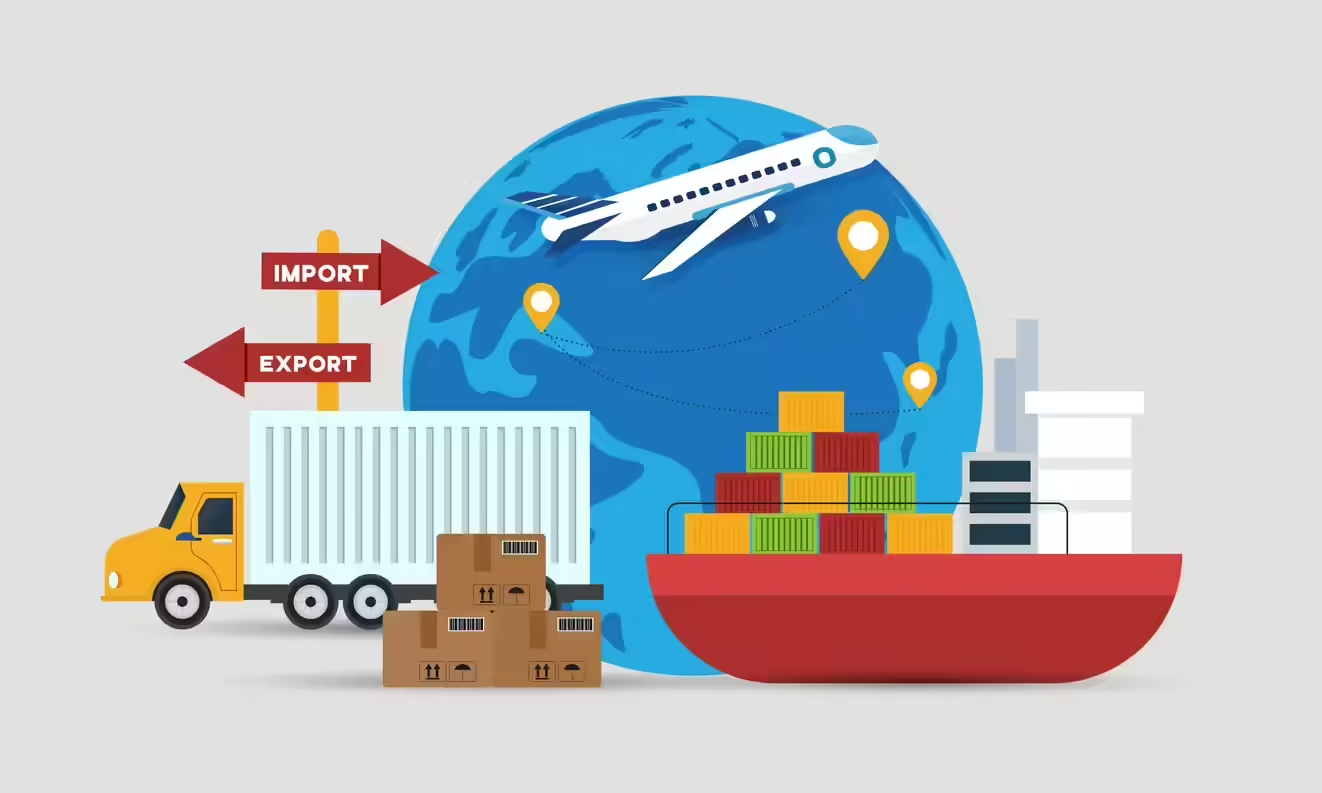
International trade is one of the riskiest trades ever. Businesses face shipment delays, financial losses, sudden policy changes, and other compliance penalties. One wrong decision can disturb the whole supply chain process. As per the World Trade Organization, the international trade volume dropped by 1.2% in 2023 because of geopolitical tensions and economic uncertainty.
The tariffs change overnight, and sanctions expand without any warning. Because of the conflicts or climate events, supply chain processes can also break down. The COVID-19 era showed how fragile global trade really is. McKinsey reports that 75% of companies experienced supply chain disruptions in recent years.
In this challenging international trade market, it is important to rely on updated and accurate reports. This is where import and expert data becomes important. It turns uncertainty into visibility. Import and export data helps lower international trade risk by giving businesses trade transparency, up-to-date information about market trends, partner trustworthiness, and compliance with regulations. For example, by looking at shipment tracking and customs declarations, companies can spot fraud, improve logistics, find trusted suppliers, and handle complicated international legal rules.
This article shows how import and export data can lower risks in international trade. It also explains how traders, exporters, importers, and policymakers use this data to protect revenue, follow rules, and make better decisions for their business success.
In international trade, there are a huge number of risks involved. Market risk comes first on the list. As prices shift quickly, demand issues and falls without any notice. A profitable product today may lose its worth in the next quarter. Compliance risk is also a bigger issue in global trade. Different countries follow different rules. A small documentation error can sometimes cause fines or shipment seizures.
The next is counterparty risk, as not every buyer or supplier is reliable. Some fail to pay while others disappear mid-contract. Supply chains also add risk or more pressure. Delays at ports, container shortages, and route disruptions are also challenging. According to the World Bank, logistics bottlenecks increase trade costs by up to 30% in developing markets.
Geopolitical and political risks are often challenging. Sanctions, trade wars, border closures, currency, and financial risks also follow closely. When exchange rates change, they can impact both margins and cash flow. The IMF points out that currency swings are still a major concern for companies trading across borders.
Traditional risk management often depends on manual research, phone calls, static reports, and old supplier references. This process is slow and usually incomplete. By the time decision-makers get the information, the market may have already changed. Most traditional systems only react after problems happen, addressing issues once losses have already occurred. They offer little early warning, no real-time insight, and no predictive signals. In today’s trade environment, this gap can be expensive. Businesses now need live, reliable trade intelligence to stay ahead.
There are multiple resources available online to get trade data. Customs authorities publish shipment records, and governments maintain trade databases. Private data aggregators collect, clean, and structure this information. Trade intelligence platforms make it actionable and searchable.
Trust is important in this context. Good trade data should be accurate, up to date, and follow international data laws. The best platforms update their data often and fix any mistakes or duplicates. When used well, import and export data can help manage risks.
The following are the key benefits that import and export data provide in reducing risk in international trade:
Trade shows the actual shipment history, not marketing claims. Businesses can easily see how often a buyer imports or how regularly a supplier exports. Consistency, frequency, and volume matter in this case. This helps validate partners before contracts are signed. It reduces fraud, and it lowers counterparty risk as well. Businesses tend to avoid working with companies that have no trade history. They make decisions based on evidence rather than relying on trust.
Using the wrong HS codes often leads to penalties. With trade data, companies can check how products are classified around the world and see what is standard in different markets. Trade data also helps track restricted goods and watch for sanctioned regions. By monitoring where goods are shipped, businesses can avoid high-risk destinations and lower the chances of fines, shipment delays, and legal trouble.
Looking at past trade data helps reveal demand patterns, such as seasonal spikes, declines, and growth in new markets. With this information, businesses can forecast demand more accurately and manage price changes more easily. Traders can track how prices shift over time in different regions, which leads to better pricing strategies and contract planning. This means less guesswork and more control.
Relying too much on a single supplier can be risky. Trade data helps identify these risks by showing where other suppliers are available and how active they are. If disruptions happen, companies can quickly switch to alternatives. This reduces downtime and helps keep operations running, even during tough times.
Trade flows often shift before a crisis makes the news. For example, falling exports or sudden drops in imports can serve as early warning signs. By watching these changes, businesses can adjust their market strategies in time. This helps them make better decisions about entering or leaving markets, improving timing, and reducing risk.
Trade activity can reveal a lot about financial stability. Regular shipments usually mean a business is stable, while irregular patterns can be warning signs. Banks, insurers, and exporters use this information to judge credit worthiness. As a result, payment terms are safer, contracts are stronger, and the risks of default or non-payment go down.
Before entering new markets, exporters use trade data to validate demand. They analyze import volumes and competitor activity. This helps in reducing market entry risk. It also helps in supporting pricing and positioning decisions.
Source: https://www.intracen.org/resources
With the import export data, the importers have access to reliable suppliers through shipment history. They can identify suppliers with consistent exports. This avoids dependence on unstable sources. It also reduces supply chain disruptions.
Source: https://www.supplychaindive.com/
For trade finance decisions, banks use trade data. Insurers rely on it for cargo and credit risk assessment. Verified trade activity improves underwriting accuracy.
Source: https://www.iccacademy.org/
The following are the key benefits of understanding trade data for risk management:
Trade data helps businesses rely on facts rather than assumptions. They no longer need to trust gut feelings or outdated reports. With access to real shipment volumes, partner activity, and market trends, decisions are based on what is happening now. This leads to fewer costly mistakes and gives teams across the company more confidence.
Uncertainty is a big risk in international trade. Trade data lets companies spot problems early, such as falling demand, unreliable suppliers, or unusual trade patterns. With this early warning, businesses can plan ahead instead of reacting at the last minute. Fewer surprises make operations run more smoothly.
Markets can change quickly. Tariffs might rise or fall, and shipping routes can be disrupted. With up-to-date trade data, businesses can respond quickly. They may switch suppliers, adjust prices, or find new shipping routes in time. Acting fast is important in global trade and can mean the difference between a loss and keeping the business going.
Not every company makes the most of trade data, but those that do gain an edge. They can move into new markets faster, negotiate better deals, and find opportunities others overlook. Trade intelligence data is more than a report; it gives companies a real advantage.
Lower risk means fewerLower risk leads to fewer losses. Picking better partners helps avoid defaults, and smarter sourcing cuts down on delays and penalties. Over time, these changes improve profit margins. Profitability grows not by taking bigger risks, but by having more control.
|
Challenge |
Explanation |
|
Data accuracy |
Errors or missing records may exist |
|
Reporting delays |
Some countries publish data late |
|
Analysis complexity |
Requires expertise and tools |
|
Legal considerations |
Data privacy and compliance rules |
Here are some best practices for using import and export data effectively:
- Use multiple data sources to confirm the data stats. Never rely on one dataset alone; combine trade data with market research and local insights. Context also plays a crucial role.
- Invest in analytics tools to get reliable data, and use visualizations to spot patterns more easily. Make sure to update your data regularly, since outdated trade data quickly loses value.
- Train your team well, since data is only useful if people understand it. Support ongoing learning, and make trade intelligence a regular part of your strategy instead of a one-time effort.
TradeYao makes it easy for businesses to find and analyze global import and export data. The platform offers organized, searchable trade records from many countries. Businesses can quickly track buyers, suppliers, products, and shipment trends.
TradeYao is built for accuracy and ease of use. The data is cleaned, standardized, and updated often. Businesses use it to lower counterparty risk, improve compliance, and build stronger supply chains. For companies working in global markets, TradeYao turns raw trade data into useful risk insights.
International trade comes with risks, but those risks don’t have to be unknown. Using import and export data gives businesses more visibility, control, and the ability to plan ahead. This data helps you find trustworthy partners, stay compliant, predict demand, and react quickly to changes.
Managing risk with data is now essential, not just a choice. Companies that use trade data in their planning can cut losses and build long-term stability. Stay up to date with the latest import and export data from TradeYao to keep your business ahead in global trade.
Industrial valves are small mechanical devices that play ...
Read More
The international trade of cotton is essential for the ra...
Read More
As one of the leading exporting nations in the world, Fra...
Read More