

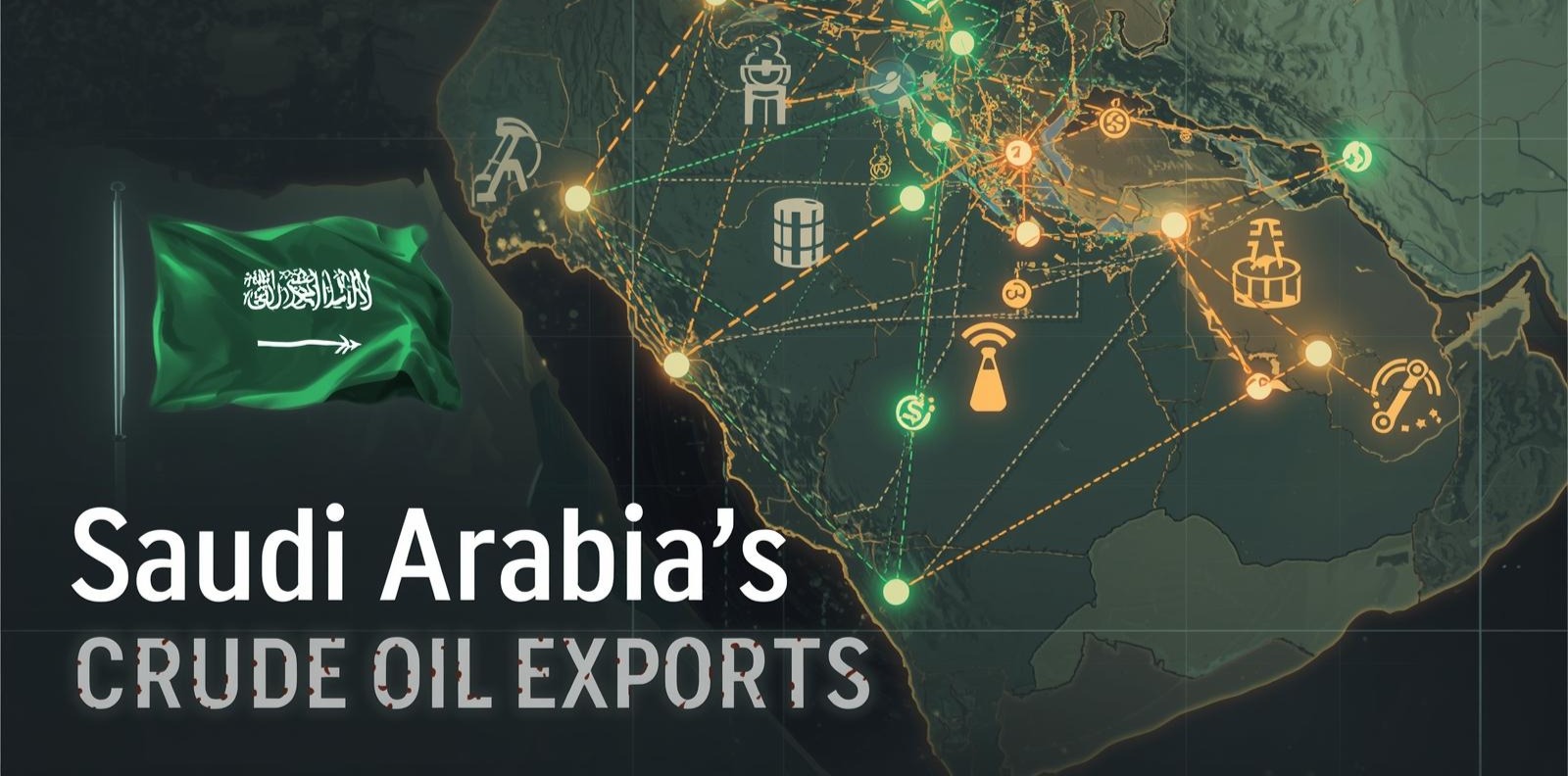
Oil is a basic need for running the world’s operations in every field of work. Oil is used in operating millions of automobiles, aircraft and ships around the world. As one of the most significant commodities worldwide, oil prices determine the country's upcoming year’s budget, and its reserves influence its worth among others. Saudi Arabia is one of the world's most significant oil exporters, supplying crude oil to the majority of countries. To understand Saudi Arabia's crude oil exports country by country, it is necessary to understand the nation's export patterns to analyze future oil market forecasts and how they can influence different sectors of the economy.
Saudi Arabia has the largest reserves of crude oil and petroleum in the world. The country’s economic well-being is highly dependent on crude oil trading, which is why Saudi Arabia is a de facto partner in OPEC. It means that the future policies of Saudi Arabia's oil trade will determine the oil prices worldwide. OPEC, the Organization of the Petroleum Exporting Countries, is a union of countries that are involved in trading oil to different parts of the world. According to OPEC, Saudi Arabia holds around 17% of the world's petroleum reserves.
Saudi Arabia is the world's largest oil producer, with a current production capacity of nearly 10–12 million barrels per day. After the Russia-Ukraine war in 2025, many countries have turned their faces towards Saudi Arabia to play their part in controlling the global oil prices. When it comes to oil production in Saudi Arabia, Aramco is highlighted as one of the country's national oil producers and the world's largest oil-producing company. Aramco manages the major oil and petroleum dealings in Saudi Arabia and generates oil and gas, while focusing on refining petrochemicals. The company has 250.0 billion barrels of oil reserves, which they are using to optimize production and sustain it for a long time.
Aramco has been working towards innovation, offering sustainable resources and energy-efficient solutions while utilizing oil reserves. The Saudi Arabian company sells oil in five grades, depending on the nature of the operations. Arabian Super light, Extra light, Medium, and Heavy are some of the highlighted categories of oil exported by Saudi Arabia. Moreover, they are using crude oil to produce lubricants and other base oils by mixing it with chemicals and adding value.
Here’s a breakdown of top importers of crude oil from Saudi Arabia with barrels per day figures:
China is one of the main trading partners of Saudi Arabia. When it comes to exporting crude oil, China has been importing crude oil from the Middle East. in 2025, with exports reaching a two-year high in August. In October 2025, Saudi Aramco allocated about 51 million barrels (1.65 million barrels per day) to Chinese refiners.
India is another top crude oil importer from KSA. Even though Russia was the top oil provider to India, due to some geopolitical shifts now Saudi Arabia has taken over with over 11% share of oil trade in India. India is set to receive 300,000 bpd to around 400,000 bpd in October–November 2025.
Japan fulfills its needs for crude oil and petroleum products from Saudi Arabia. The country is a significant contributor in the Saudi Arabia crude oil trade and owns up to 40% of shares. In August 2025, Saudi Arabia provided approximately 43.6% of Japan's oil imports. In the same month, Japan's total crude oil imports were around 30 million barrels from Saudi Arabia
South Korea gets a major supply of oil from Saudi Arabia. Saudi Arabia is the largest supplier of crude petroleum to South Korea, with its exports forming a substantial portion of South Korea's total crude imports. In a single month, July 2025, South Korea imported $2.03 billion in crude petroleum primarily from Saudi Arabia.
Even though the imports have decreased from the past two years, the U.S. imported roughly 349,000 barrels of crude oil daily from Saudi Arabia in 2023. Saudi Arabia exports oil to countries like China, India, and Japan, with the U.S. being a smaller but still significant market for its crude.
The exports can be influenced by certain factors, such as:
Saudi oil export patterns are shaped by global geopolitical dynamics. The export patterns are highly dependent on partnerships with China, which ensures a steady Asian market, while ties with the USA and Saudi ties influence strategic energy security. Middle East regional relations also affect routing and political risk. Shifts in the international power balance directly redirect Saudi crude oil flows.
Through OPEC quotas and production cuts, Saudi Arabia helps stabilize the global oil market. By adjusting supply levels, the Kingdom of Saudi Arabia influences international oil prices, which strikes a balance between revenue needs and long-term market share. Coordinated actions allow Saudi exports to adapt quickly to market volatility, ensuring steady demand.
Importers’ policies shape Saudi crude exports. Asian economies are heavily dependent on imported oil and prioritize stable long-term Saudi supplies. In contrast, Europe seeks to diversify its energy sources to reduce its reliance on Middle Eastern oil. These different strategies influence Saudi Arabia’s customer base, leading to stronger partnerships with Asia and shifting European demand.
Saudi oil exports rely on strong logistics networks. The Strait of Hormuz and Bab el-Mandeb are vital shipping lanes, while the East–West Petroline to the Red Sea offers flexibility and security. Export ports, such as Ras Tanura and Yanbu ensure global access and thereby reducing risks associated with regional disruptions.
Vision 2030 - Saudi Arabia is a goal, a plan devised by Saudi authorities, aimed at achieving greater sustainability and increased diversification across social, political, and economic aspects. A plan has been made to improve trade relations and internal production goals. When it comes to crude oil, the following are the future plans of the Saudi Arabian government:
The Saudi government plans to invest in renewable energy sources, including solar, wind, and green hydrogen.
The focus will be on Carbon capture & storage (CCS) and blue hydrogen initiatives.
One of the most significant Saudi companies, Aramco, which produces oil, is shifting from an oil-only focus to energy technology and sustainability.
A plateau and eventual decline in global oil demand due to the energy transition is expected while OPEC forecasts steady growth and highlighting contrasting perspectives that influence Saudi export strategies.
Asia, particularly China and India, continues to drive global oil demand growth. Their industrial expansion, transportation needs, and petrochemical industries make the region Saudi Arabia’s most important market for crude oil.
Penalty for producers, stricter climate policies, and global recession risks significantly disrupt trade flows. These challenges can affect Saudi Arabia’s crude export levels, their pricing strategies, and long-term energy revenues.
Despite global efforts towards decarbonization, oil remains essential for transportation, aviation, and petrochemical production. Saudi Arabia must adapt, as demand growth slows but crude remains a critical part of the energy mix.
TradeYao is an online data directory designed to provide you with the right information for finding trade data, import details, export quantities, and other relevant trade-related information. When it comes to Saudi Arabia and its crude oil export to the rest of the world, you can collect all the information to develop a business plan, whether to import or invest in Saudi Arabian crude oil companies. You can choose TradeYao as the source of authentic insights.
As the Saudi Arabian market for crude oil exports expands, more innovative options are opening up opportunities. Saudi Arabian oil-producing companies are utilizing the best research and development resources to convert crude oil into sustainable energy. It is a great opportunity to begin investing, and Tradeyao will work with you hand-in-hand to help you find the right and up-to-date data and information regarding the exports and production of crude oil in the region.
In this blog, we have discussed aspects of Saudi Arabia related to its crude oil trade with the rest of the world. Saudi Arabia's reign as the world's largest oil producer is expected to be extended in the upcoming years, as discussed in the blog. The future of the oil industry in KSA will remain central in global oil exports for the next two decades. However, continuous diversification and innovative measures to convert oil into renewable energy resources will help balance the oil trade and avoid future decline. Saudi Arabia has been working with a futuristic plan to optimize its exports as well as investing in future energy and renewable resources, which will make the country even more influential.
Industrial valves are small mechanical devices that play ...
Read More
The international trade of cotton is essential for the ra...
Read More
As one of the leading exporting nations in the world, Fra...
Read More