

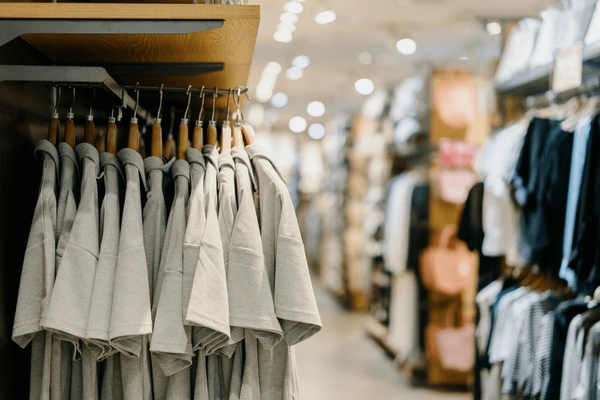
Garments are one of the most used pieces of clothing in the whole world. In markets, shops, and our daily lives, garments and clothes are everywhere. International trade means countries making clothes and exporting them to buyers worldwide. This trade plays a major role in the apparel exports and textile industries. The garment export sector faced many challenges during the COVID-19 pandemic, with factory closures, supply chain disruptions, and fewer orders. Now, the situation is getting better. Online shopping is growing; nowadays, brands are focusing more on eco-friendly materials, and technology is making factories more efficient.
In this blog guide, we will discuss in detail the top exporting countries that hold a specific position in garment exports, how the global trade is working, and where the opportunities lie. Continue reading to explore the global garment trade 2025.
The international apparel export market, or textile and garment industry, is gaining huge momentum. World trade in goods grew by about 2% in 2024, with total merchandise flows reaching roughly US$32.2 trillion in goods and services, according to the WTO and trade data.
In 2024, Bangladesh remained the world’s second-largest apparel exporter, shipping garments valued at $38.48 billion and holding about 6.9% of the global market. Vietnam’s garment exports also grew by 9.34% to reach $33.94 billion.
The industry includes several segments, such as apparel like shirts and dresses, knitwear like t-shirts and sweaters, woven garments like pants and jackets, and accessories like scarves and belts. Countries often focus on certain segments based on their expertise and available factories.
Major buyers of garments are the USA, the European Union, and Japan. Many fashion brands in these places source their clothing from Asia, Africa, and Europe because cost and supply chain matter.
Growth in the industry is now driven by more people shopping online, a greater demand for eco-friendly materials, and the use of technology like automation and data to make factories work better and faster.
But there are challenges too. Labor costs in many traditional exporting hubs are rising. Logistics shipping delays, container costs, and port congestion affect profit. Environmental concerns and rules (pollution, water use, carbon emissions) are forcing factories to adopt cleaner methods. These trends and challenges are shaping the future of the garment export industry.
The following are the leading garment-exporting countries in the world in 2025:
In the world, China is one of the largest and top garment exporters. According to TexLeader, last year, its textile and clothing exports reached around US $322.4 billion. China sells clothing to almost every country, and its largest buyers are the United States, the European Union, and Japan.
China is known for its large manufacturing capacity, affordable production, and reliable supply chain. Its factories produce a wide range of clothing, from basic t-shirts to luxury fashion, and deliver orders quickly. Major brands such as H&M, Zara, and Uniqlo source their garments from China.
Rising labor costs and new environmental regulations are shifting the industry. In response, China is investing in sustainable fabrics, digital production, and eco-friendly dyes to stay ahead. Importers and investors still see China as a leading option for its efficiency, quality, and innovation.
Bangladesh is the world’s second-largest garment exporter, reaching $38.48 billion in exports in 2024. Most of its clothing goes to buyers in the EU and the USA, who value its affordable and good-quality products. Bangladesh’s garment industry succeeds because of its low labor costs, a strong knitwear sector, and many skilled female workers.
Every year, Bangladesh’s Ready-Made Garment sector exports millions of t-shirts, sweaters, and denim products. With stronger compliance, new technology, and more green factories, the country is moving toward becoming a global example of sustainable garment production.
Vietnam is now among the top three garment exporters, with apparel exports reaching $33.94 billion in 2024. Major brands such as Nike, Zara, and H&M choose Vietnamese factories for their quality and quick turnaround. Trade agreements like CPTPP and EVFTA allow Vietnam to reach markets in the EU, Canada, and Australia with reduced taxes. Vietnam is also investing in smart manufacturing, automation, and eco-friendly production methods.
Vietnam's textile manufacturing industry is popular for its skilled workforce, efficient logistics, and stable policies. Many importers see it as a dependable alternative to China, offering a good balance of cost and quality.
In 2024, India's total garment exports are valued at around US $16.2 billion. The country is one of the most diverse exporters, producing a huge variety of silk, cotton, synthetic, and blended fabrics.
The key strength of India’s export lies in its abundant raw materials, skilled artisans, and design creativity. India’s main buyers are the USA, UAE, UK, and Germany. Government schemes like the PLI (Production Linked Incentive) and MEIS are helping local manufacturers expand.
India is also investing in sustainable production by using organic cotton and natural dyes. The country's eco-friendly textile industry is growing quickly, making it an attractive option for brands that want ethical and environmentally conscious suppliers.
Allowing quick delivery to EU markets, Turkey has a strategic location close to Europe. Turkey exported around US$18 billion worth of textiles and apparel in 2024. Turkish factories have a reputation for producing high-quality fabrics, luxury fashion, and delivering orders quickly.
In the premium market, Turkey’s focus is on organic cotton, sustainability, and innovative fabric technology. Turkey is a smart sourcing destination for buyers looking for European quality with a faster time to market.
For luxury and fashion design exports, Italy is quite a famous country. The country manufactures premium garments, leather goods, and high-end fabrics. In 2024, Italian exports reached about US $15.6 billion. Brands like Prada, Gucci, and Armani make Italy a hub for luxury garment exports. Italy is known for its innovative designs, expert tailoring, and use of sustainable luxury fabrics. Many boutique fashion houses in Europe and the US depend on Italian suppliers for exclusive, high-quality clothing. Italy remains a leader in the luxury fashion industry.
In Knitwear and denim exports, Pakistan is at the top of the list. In 2024, the export value reached around US $6.9 billion. Pakistan is known for its affordable prices, high-quality textiles, and experienced workers. The country is working to improve factory standards and labor laws to appeal to more international buyers. Denim, home textiles, and sportswear are its main exports, helping Pakistan become a leading exporter in Asia.
In 2024, Indonesia exported around US$11.7 billion worth of garments. As a member of ASEAN, the country attracts investors with its trade-friendly policies and free trade agreements. To expand its export market, Indonesia’s apparel industry is also working to improve sustainability and adopt new technology. However, they also face challenges such as lower labor productivity and higher energy costs.
Despite these challenges, many international brands see Indonesia as a reliable long-term manufacturing partner because of its growing eco-fashion sector and stable policies.
Cambodia exported around US $9.3 billion worth of garments in 2024. The industry employs over 850,000 workers, most of whom are women. Most of Cambodia’s garment exports go to the US and the EU. Factories are working to improve ethical standards, protect worker rights, and ensure environmental safety.
Many are also adopting solar energy and recycled materials to make production more sustainable. For manufacturing both eco-friendly and affordable clothing, low labor costs and better infrastructure have made Cambodia an important place.
The USA is one of the most popular fashion consumers. They also export a huge variety of garments. In 2024, its apparel exports were worth around US $6.2 billion. The country exports mainly designer brands, sportswear, and rebranded fashion.
The United States is known for its innovation, strong branding, and leadership in design. It also exports clothes made in other countries to new markets. More chances are opening up for local manufacturers who use automation and eco-friendly materials. Moreover, the ‘Made in America’ strategy is also helping local factories to expand, especially for those who are keenly focused on custom clothing and other sustainable options.
|
Country |
Export Value (2024) |
Main Buyers |
Strengths |
|
China |
$322.4 B |
USA, EU, Japan |
Scale, tech, efficiency |
|
Bangladesh |
$38.48 B |
EU, USA |
Low cost, knitwear |
|
Vietnam |
$33.94 B |
USA, EU |
Quality, trade deals |
|
India |
$16.2 B |
USA, UK, UAE |
Raw materials, diversity |
|
Turkey |
$18 B |
EU |
Fast fashion, proximity |
|
Italy |
$15.6 B |
EU, USA |
Luxury, craftsmanship |
|
Pakistan |
$6.9 B |
EU, USA |
Denim, knitwear |
|
Indonesia |
$11.7 B |
ASEAN, USA |
Eco focus, FDI |
|
Cambodia |
$9.3 B |
USA, EU |
Ethical manufacturing |
|
USA |
$6.2 B |
Canada, Mexico |
Branding, design |
Source: https://www.wto.org/
Asia is at the top of the list for producing huge quantities of cost-effective fashion, with countries such as Bangladesh, Vietnam, China, India, and Pakistan at the top. Europe, especially Turkey and Italy, is popular for its luxury and skilled workforce. This shows that both the high-end fashion and the mass market can thrive in the same way.
For international traders, these data insights help in balancing cost, sourcing smarter, and ethics.
With the increasing demand for digital fashion, sustainability, and AI-based design, garment exports are expected to grow steadily between 2025 and 2030. The international apparel market is expected to reach US$2.3 trillion by 2030, as per Statista.
More brands and buyers are looking for suppliers who are ethical, transparent, and sustainable. As a result, exporters who use eco-friendly materials, smart design tools, and green factories are seeing new business opportunities.
Importers can find trustworthy suppliers using B2B platforms that connect verified garment exporters with buyers worldwide. Exporters can grow their business abroad by using digital marketing, earning certifications such as OEKO-TEX or GOTS, and being open about their practices to build trust.
Businesses that combine style, sustainability, and technology will be best positioned to meet global demand in the future.
The garment is changing rapidly as technology plays a crucial role in transforming how clothes are made. To cut waste and increase speed, many factories are now using AI, automation, and 3D designing. For example, 3D garment design software helps brands test designs virtually before sewing.
Sustainability is shaping the future of fashion. Circular fashion, which means turning old clothes into new ones, is becoming more popular. Many brands now use organic cotton, recycled polyester, and eco-friendly dyes. Textile Exchange reports that sustainable fiber use increased by over 20% in 2024.
Countries such as Bangladesh, Vietnam, and India are building environmentally friendly factories to meet international standards. Exporters who combine new ideas with a sense of responsibility will lead the way, making clothes that look good and are better for the environment.
Understanding export trends is essential if you are exploring trade opportunities in the garment sector. To access accurate and up-to-date data about China’s garment exports and other global trade insights, platforms like TradeYao make it easier for businesses, importers, and investors. The platform helps users identify potential trade partners and sourcing opportunities by providing reliable B2B lead data, categorized by country.
To stay informed about the latest trends in the garment industry, with clear and detailed export reports, TradeYao enables users to analyze key markets and track trade flows. TradeYao provides authentic trade intelligence to help you make smarter business decisions, whether you are going to expand your sourcing network or want to study the top garment-exporting countries.
The international trade of garments is connecting countries, factories, and people around the world. Every country adds value to this colorful industry, from China’s massive production to Italy's luxury fashion; the garment industry is full of opportunity. Through smart collaboration and innovation, exporters and importers can grow together as trends shift towards sustainability and technology. Built on creativity, eco-conscious choices, and strong trade partnerships, the future of garment exports looks bright as the global demand is continuously rising.

Industrial valves are small mechanical devices that play ...
Read More
The international trade of cotton is essential for the ra...
Read More
As one of the leading exporting nations in the world, Fra...
Read More