

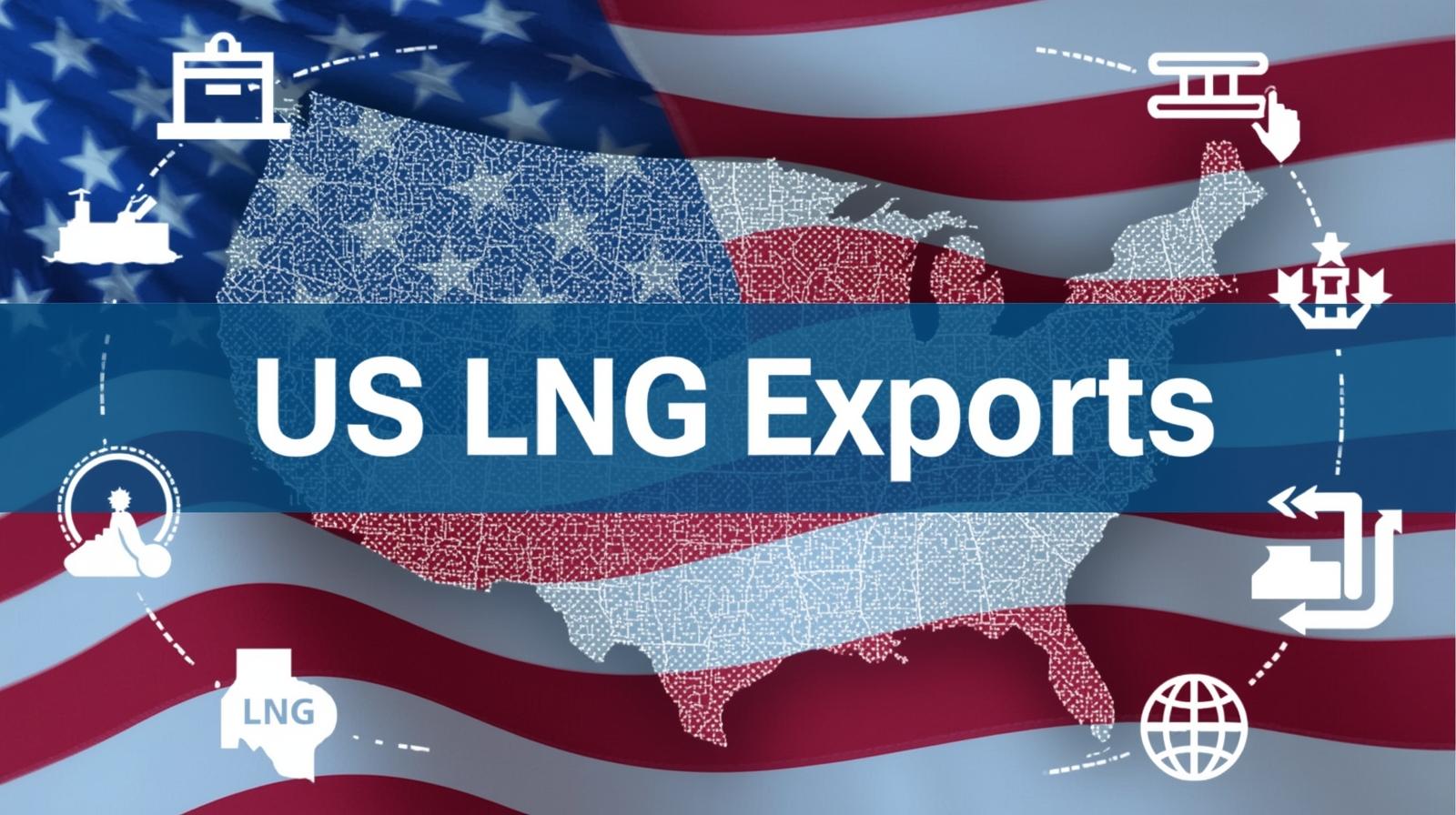
The United States has become one of the world’s top exporters of liquefied natural gas (LNG). In 2024, U.S. LNG exports averaged about 11.9 billion cubic feet per day (Bcf/d), making it the largest LNG exporter globally.
LNG exports matter a lot for several reasons. First, they help with global energy security; many countries rely on stable gas supplies, especially during supply shocks. Second, they influence pricing; U.S. gas prices (Henry Hub) often act as a benchmark for global deals. Third, in the transition to cleaner fuels, LNG is seen by many as a “bridge fuel” (less carbon than coal) in the move toward sustainability.
The U.S. LNG story is quite recent. Just ten years ago, the country was not a big player in the LNG trade. In 2015, U.S. LNG exports were less than 0.1 billion cubic feet per day (Bcf/d). But by 2023, this number had grown to almost 12 Bcf/d, making the U.S. the world’s largest LNG exporter.
This growth was made possible by the shale gas revolution. New technologies, such as hydraulic fracturing and horizontal drilling, have unlocked huge natural gas reserves. With an abundant supply, companies began investing in liquefaction plants, pipelines, and export terminals to send LNG abroad.
Today, the U.S. has several major LNG export hubs. Sabine Pass in Louisiana was the first large terminal, followed by Corpus Christi in Texas and Freeport in Texas. More recently, new projects, such as Plaquemines LNG in Louisiana, have added to export capacity.
According to the U.S. Energy Information Administration, the country’s LNG export capacity is expected to increase by 9.7 Bcf/d by 2028, keeping the U.S. in a strong position in the global gas market.
Here is the list of the top US LNG exporters by country that can help you in finding importers easily for your next sale.
The Netherlands has become the biggest buyer of U.S. LNG in Europe. It acts as a central hub for receiving and redistributing LNG to other European nations. The country invested in floating storage and regasification units (FSRUs), which allowed it to quickly expand import capacity after the Russia-Ukraine crisis. In 2024, the Netherlands took in a large share of U.S. LNG exports, strengthening its position in Europe’s energy market. Its port facilities and storage infrastructure make it one of the most reliable gateways for American LNG into the European Union.
France is another major importer of U.S. LNG. It increased imports to reduce its dependence on Russian pipeline gas. In 2024, France accounted for a significant part of Europe’s 53% share of U.S. LNG shipments. According to the U.S. Energy Information Administration (EIA), this makes France one of the top European destinations. French LNG terminals, such as Dunkirk and Montoir, are central to this role. With strong winter heating demand and a push for energy security, France continues to rely on U.S. LNG as a stable and flexible source of natural gas supply.
The United Kingdom has long been a strong importer of LNG, and U.S. supply plays an important role. LNG helps the UK balance its energy needs, especially in winter when heating demand rises. The country does not have large gas storage, so it depends on steady LNG deliveries. U.S. LNG mainly arrives at import terminals in Milford Haven, Wales, which are among the largest in Europe. By bringing in American LNG, the UK strengthens its energy security while supporting regional supply, since some of the LNG imported is also re-exported to other European nations.
Japan is the world’s second-largest LNG importer overall, after China, and has been a steady customer of U.S. LNG. The country depends heavily on natural gas because it has few domestic energy resources. Since the Fukushima nuclear disaster in 2011, Japan has increased its reliance on LNG for electricity. U.S. LNG provides Japan with stable and secure long-term supply contracts. In recent years, Japanese utilities and trading companies have signed multiple deals with U.S. exporters. This ensures Japan can meet its energy needs while also transitioning to cleaner fuels compared to coal or oil.
South Korea is one of the fastest-growing buyers of U.S. LNG. The country relies on LNG for power generation, heating, and industrial use. In 2024, South Korea imported a major share of U.S. LNG going to Asia. Government policies to move away from coal and nuclear power have further boosted demand. South Korea has also signed long-term contracts with U.S. suppliers, ensuring steady imports for decades ahead. With modern LNG terminals and a strong energy infrastructure, South Korea is a stable and important partner for U.S. LNG exporters in the Asia-Pacific market.
China is the world’s largest LNG importer and has resumed strong purchases of U.S. LNG after a slowdown in 2022 due to trade tensions and COVID-19 disruptions. In 2024, Chinese demand for U.S. LNG rose as the country sought to cut its reliance on coal and improve air quality. China has signed long-term contracts with U.S. exporters, securing billions of cubic feet of LNG per day for the future. With rapid industrial growth and a focus on cleaner energy, China is expected to become one of the largest and most important buyers of U.S. LNG.
Europe continues to diversify away from Russian gas, creating strong demand for U.S. sources. In Asia, many countries are shifting from coal to gas to reduce pollution, creating rising LNG demand.
In Africa and South Asia, countries like Bangladesh, Pakistan, and the Philippines are building import infrastructure and may become new buyers.
U.S. exporters can pursue long-term supply contracts or flexible spot trades depending on buyer needs and market volatility.
Several trends are shaping the future of U.S. LNG exports. One important change is in shipping and floating storage regasification units (FSRUs). These units make it easier and faster for new markets to start importing LNG, without waiting years to build onshore terminals.
Another big trend is green LNG. Many buyers now want carbon-neutral energy. Some companies offer LNG with carbon offsets or lower emissions during production and transport. This makes LNG more attractive for countries focused on climate goals.
Price volatility is also a major factor. Global gas prices can rise or fall quickly due to weather, demand, or politics. This creates challenges for long-term contracts and affects profit margins.
Finally, U.S. policy and trade relations play a strong role. Government rules on permits, taxes, and trade deals can speed up or slow down export growth. These trends will guide how U.S. LNG develops worldwide.
Infrastructure bottlenecks & high costs: Building new liquefaction plants, pipelines, and ports is capital-intensive.
Competition: Qatar, Australia, and Russia remain strong LNG suppliers.
Geopolitics & trade barriers: Sanctions, tariffs, and diplomatic relations can disrupt trade flows.
Environmental & ESG pressures: Concerns over methane emissions, carbon footprint, and climate regulation could limit projects.
By 2030, U.S. LNG export capacity is projected to double or grow by 75% from already-sanctioned projects. Some projections even suggest the U.S. could supply one-third of global LNG by 2030.
New demand centers will shift; Asia, Africa, and South Asia will play a larger role. The U.S. is likely to remain a cornerstone LNG supplier, especially if it can maintain cost competitiveness and environmental performance.
TradeYao is a global B2B trade directory that connects buyers and suppliers in many industries, including energy, chemicals, machinery, and raw materials. For businesses in the LNG and wider energy sector, it can help by offering access to verified buyers and sellers from different regions, with up-to-date trade data including shipment details, etc. Companies can list their products, find new markets, and negotiate directly with international partners. TradeYao also supports businesses with trade leads, secure communication, and updated market insights. This makes it easier for both exporters and importers to expand globally, build partnerships, and discover new opportunities in a competitive marketplace.
The U.S. has quickly become a global leader in LNG exports, supplying Europe, Asia, and other regions with reliable energy. Top buyers like the Netherlands, France, Japan, and China show how wide the demand has grown. Opportunities are also rising in new markets through flexible contracts and clean energy goals. While challenges such as price swings, competition, and policy changes remain, U.S. LNG is set to stay important in the global market. With the right partners and platforms like TradeYao, businesses can connect, grow, and take part in this expanding trade in the years ahead.
Industrial valves are small mechanical devices that play ...
Read More
The international trade of cotton is essential for the ra...
Read More
As one of the leading exporting nations in the world, Fra...
Read More